
Hialeah Previous Resident Sources
No single roll lists every person who once occupied a Hialeah address. Ownership records are strongest for the parcel itself. Household sources are better for renters, relatives, and other occupants. Start with the newest dependable record, then move backward one link at a time. The folio and legal description keep the search tied to the same land when a street number, postal city, or boundary changes.
| Source | Time span | Keeper | Evidence found |
|---|---|---|---|
| Official Records deed index | Most web records from 1974; older books continue earlier | Miami-Dade Clerk and Records Library | Buyers, sellers, recording dates, document references, legal descriptions |
| Address and city directories | Issue-specific, including late nineteenth-century Dade material | MDPLS Main Library and HistoryMiami | Named subscribers or householders at an address |
| State and federal census schedules | Florida 1935 and 1945; public federal schedules through 1950 | Libraries, archives, and genealogy collections | Household members present in the census year |
| Permits and plans | Varies by file and system | Hialeah Permit Search and City Clerk | Address, folio, listed owner, work type, and archived plans |
| Historic aerials | Hialeah comparison imagery from 2001 through 2022 | Hialeah GIS Maps Gallery | Visible building and site change, not resident names |
For recent past residents, begin with the property roll and purchase deed. For an earlier household, use directories and census schedules after the deed chain fixes the correct parcel. An obituary or probate file is useful near the end of a named person's trail. It may link relatives or heirs, but it does not prove that each named person lived at the property.
Start Hialeah Address History Today
The Miami-Dade Property Appraiser Property Search accepts an address, owner name, subdivision name, or folio. Its parcel card can supply the owner of record, mailing address, situs address, legal description, sales, exemptions, and parcel map. Situs means the physical location of the parcel. A mailing address is where tax mail goes, and it may be somewhere else.
Save the folio, roll year, exact legal description, and current deed reference before moving on. The tax roll supports ownership research, but it is not a list of everyone in the household. A homestead exemption can make owner occupancy more plausible for that roll year. It still does not prove continuous residence or identify relatives and renters.
Walk Hialeah Deeds Backward
The Miami-Dade Official Records search is the key ownership index. A chain of title is the linked series of recorded transfers for the same property. Most records from 1974 forward can be searched online. Search by party name, Clerk's File Number, recording book and page, legal-description fields, date range, or document type. The deed image, when available, is stronger evidence than a result row alone.
- Pull the current owner, folio, and legal description from the county parcel card.
- Find that owner's purchase deed. Confirm the subdivision, lot, block, and instrument reference.
- Read the seller, then search that seller as a buyer to locate the prior purchase.
- Repeat the buyer-to-seller link. Record each date, CFN or book/page, and legal description.
- When the online chain stops, take the last sound reference to the Records Library.
- Grantor
- The person or entity transferring an interest, often the seller in a deed.
- Grantee
- The person or entity receiving the interest, often the buyer.
- Chain of title
- The sequence of transfers tied to the same parcel.
- Legal description
- The subdivision, lot, block, plat, or other land description that survives street-address changes.
Cross Hialeah's 1974 Cutoff
Online access from 1974 does not mark the beginning of Miami-Dade land records. It marks the strongest general web coverage. Earlier deed books, indexes, and microfilm remain available through the Miami-Dade Records Library. Public computers there search by party name in last-name-first order, CFN, subdivision, lot, block, plat, and recording book/page.
Bring the last book/page and exact legal description from the online chain. This is the practical insider step that keeps an old search from drifting to a same-name person or a different lot. Staff searches cost $2 per name per year. Copies cost $1 per page, plus $2 for certification. Mail requests should include the full name, document type, and address or legal description and go to 20 NW 1st Avenue, Suite 5.246, Miami, FL 33128. The Clerk can also be reached at 305-275-1155.
Note: “Most records from 1974” does not promise that every instrument or image from that year appears online.
Hialeah Permits Date Property Change
The Hialeah permit search can be queried by address, folio, owner, or process and permit number. Results include a project number, folio, address, listed owner, application type, and map link. A permit owner is evidence tied to the project and date, not an official claim that the person lived there. Ask the City Clerk for archived permit applications, plans, or related files when the online row lacks detail.
Compare those dates with the Hialeah GIS Maps Gallery. Its “Then and Now” imagery covers 2001 through 2022 and can show when a structure, addition, or site layout changed. Aerial evidence cannot name previous residents. It helps explain why a deed, permit, and directory entry may describe a property differently in different years.
The formal 2026 city violation and lien research service is much broader than a request for one known permit. It costs $500 per folio, adds $50 for each additional address attached to that folio, and has a stated seven-to-ten-business-day target. A two-day expedite adds $100. Ask for an identified existing record first when that is all the research needs.
Keep Hialeah Parcels Straight
A postal address using “Hialeah” does not prove that the land sits within city limits. Northern ZIP areas cross municipal and unincorporated boundaries. City GIS fields distinguish the true situs city and ZIP from the owner's mailing city, ZIP, and country. Zoning codes also identify annexation and unincorporated areas. Confirm those fields before sending a permit or plan request to Hialeah.
Older research needs another geographic check. Hialeah incorporated in 1925. Earlier directories and schedules may catalog the place under Dade County, the Miami vicinity, a subdivision name, or an old census enumeration area. The folio and legal description make a better bridge than the modern postal line. An enumeration district is the small area assigned to a census taker, and its borders can change between censuses.
Match Hialeah Past Households
Deeds name owners, not all previous residents. Address sections in city and criss-cross directories reverse the usual name search: look up a street, then a house number. A criss-cross directory is arranged by address or phone rather than only by surname. Surviving countywide issues may include Hialeah, but inclusion must be checked in each volume. The historical collections and how to read them are covered on the Hialeah city directories page.
Use a simple sequence to test the household layer:
- Choose a directory issue close to a known deed or permit date and copy the entry exactly.
- Compare the address with Florida's 1935 or 1945 state census, or the public 1950 federal census.
- Test surname variants, initials, two-surname forms, and accentless spellings common in Hialeah records.
- Return to the next directory year to see whether the name, spouse, or street number changed.
Absence from an address section can mean an omitted subscriber, a vacant property, a changed number, or a missing volume. It does not prove that nobody lived there. Save the publisher and year with each hit so later researchers can reproduce it.
Close Hialeah Resident Trails
The free MDPLS Obituary Index covers more than 915,000 names from 1896 through 2008. Search first, middle, and last name with publication dates; at least a first or last name is required. A result may show name, age, newspaper or source, publication date, and birth state. Some notices contain only one sentence, so the result is a citation rather than the obituary text.
Herald items may be followed through library NewsBank access for eligible cardholders. Other named papers often require Main Library microfilm. Probate records in the Miami-Dade Civil, Family, and Probate system can connect a deceased resident with an estate and named filings. Search the index, save the case number, and ask the Clerk for the docket or specific public documents. Probate plus an obituary can point toward heirs without treating either source as proof of residence at every address listed.
The Records Library access page shown here explains the older-record cutoff and counter or mail routes.
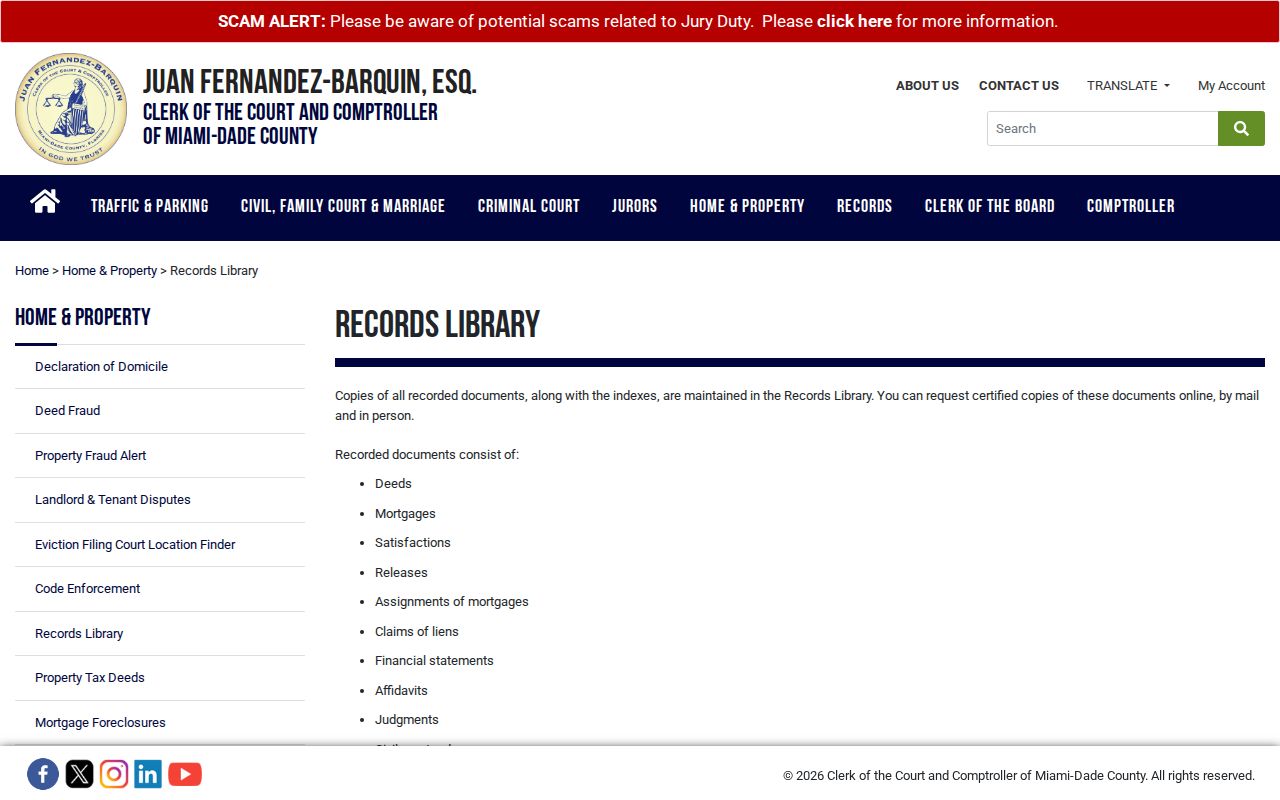
The screen is a useful handoff point once an online deed trail reaches the library era.
Lawful use. Research Hialeah previous residents for house history, genealogy, estates, and personal curiosity. Never use an address trail to stalk, harass, intimidate, or harm a living person.
Verify Hialeah Family Events
Marriage, dissolution, birth, and death records can confirm events found in a household trail, but Florida applies different access rules to each. The Florida Bureau of Vital Statistics gateway pictured below routes statewide certificate requests, while the Miami-Dade Clerk holds local marriage licenses and divorce court files. State marriage and dissolution abstracts begin June 6, 1927. Older marriage material stays with the county that issued it.
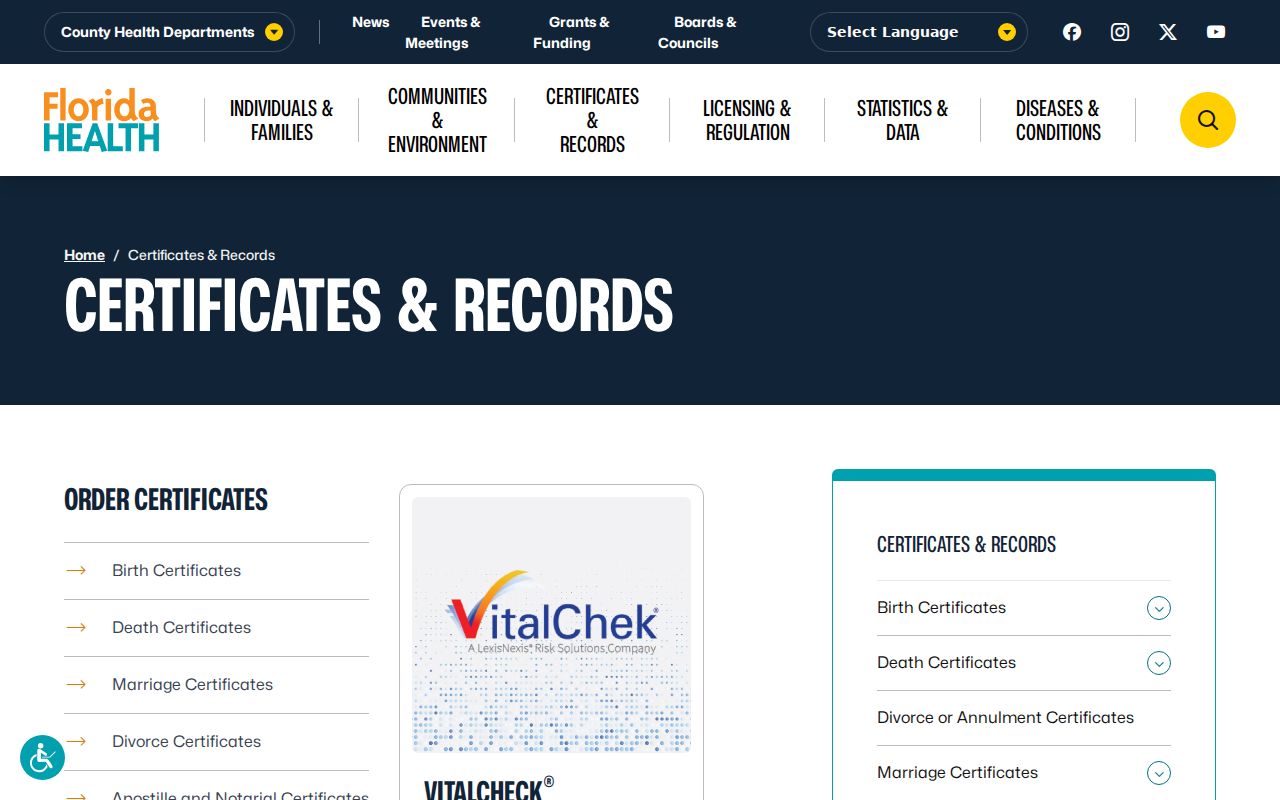
The gateway separates certificate types so the requester can follow the right eligibility and ordering path.
Birth records remain confidential until more than 125 years old, subject to seal. Death records without cause are generally public, while cause-of-death details are restricted for 50 years. An abstract confirms the reported event but contains less than a full court file. The official forms library pictured here supplies the current applications and instructions.
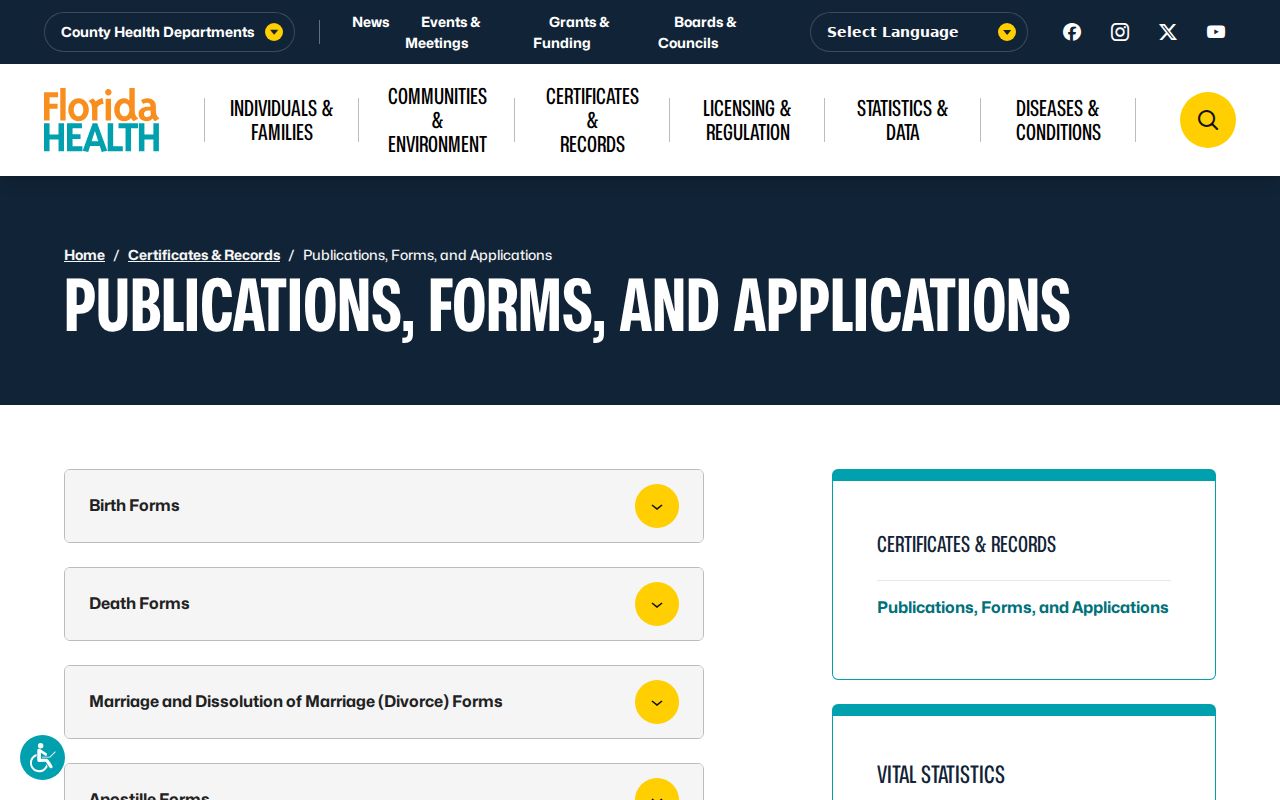
Use the form tied to the exact event and certificate type instead of a broad request for everything about one person.
The Florida marriage certificate page shown here states the statewide coverage and available order routes.
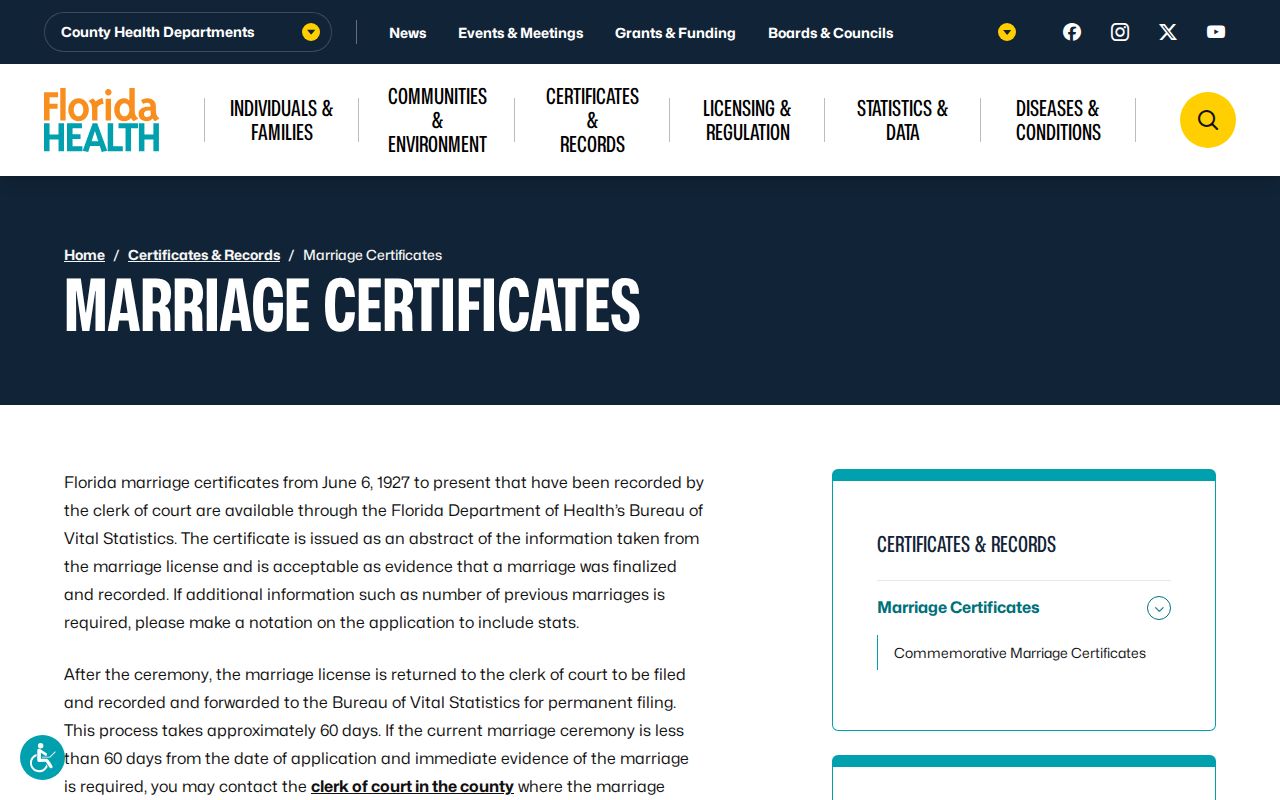
That record can support a family-history link, but it is not a continuously updated statement about a relationship or an address.