
Start a Hialeah Resident Search
The best first record depends on the starting fact. An address belongs in the Miami-Dade property search because it can return a folio, legal description, owner, and mailing destination. A full name belongs in the same roll, the Clerk's party indexes, and official business or license records. Older names and addresses may need the library shelf. No one roll is a full household list. Owners may live elsewhere, renters do not appear as owners, and an index can omit a private or unlisted person.
Build a small identity matrix before deciding two records describe the same Hialeah resident. Compare the middle name, both surnames, spouse, parcel, document date, and repeated address. This matters in a city where Spanish naming patterns and common surnames can create close matches. Older databases may drop accents, reverse paternal and maternal surnames, or shorten a compound name.
- Search the Miami-Dade Property Search by owner or address, then save the folio and legal description.
- Check deeds and other instruments in the County Recorder index. Match the parcel, date, and party role.
- Use court, marriage, obituary, corporation, or license indexes only when they fit the person and question.
- For an older household, consult the Hialeah and Miami-Dade directory collections and census sources.
- If the needed city file is not online, send a narrow Florida public-records request to the correct custodian.
Three Hialeah Records Desks
Hialeah is a municipality within Miami-Dade County, so its resident records are divided among city, county, and state custodians. The City Clerk holds city minutes, board records, archived permits and plans, local liens, and many police and code records. The county Clerk records deeds and liens and maintains trial-court, probate, and marriage files. The Property Appraiser connects addresses to parcels. Florida agencies keep statewide voter, vital, corporation, credential, and correctional sources.
Miami-Dade Property Appraiser
Countywide parcel custodian
Miami-Dade County, FL
305-375-4712
The official Hialeah City Clerk overview shows the municipal side of that split.
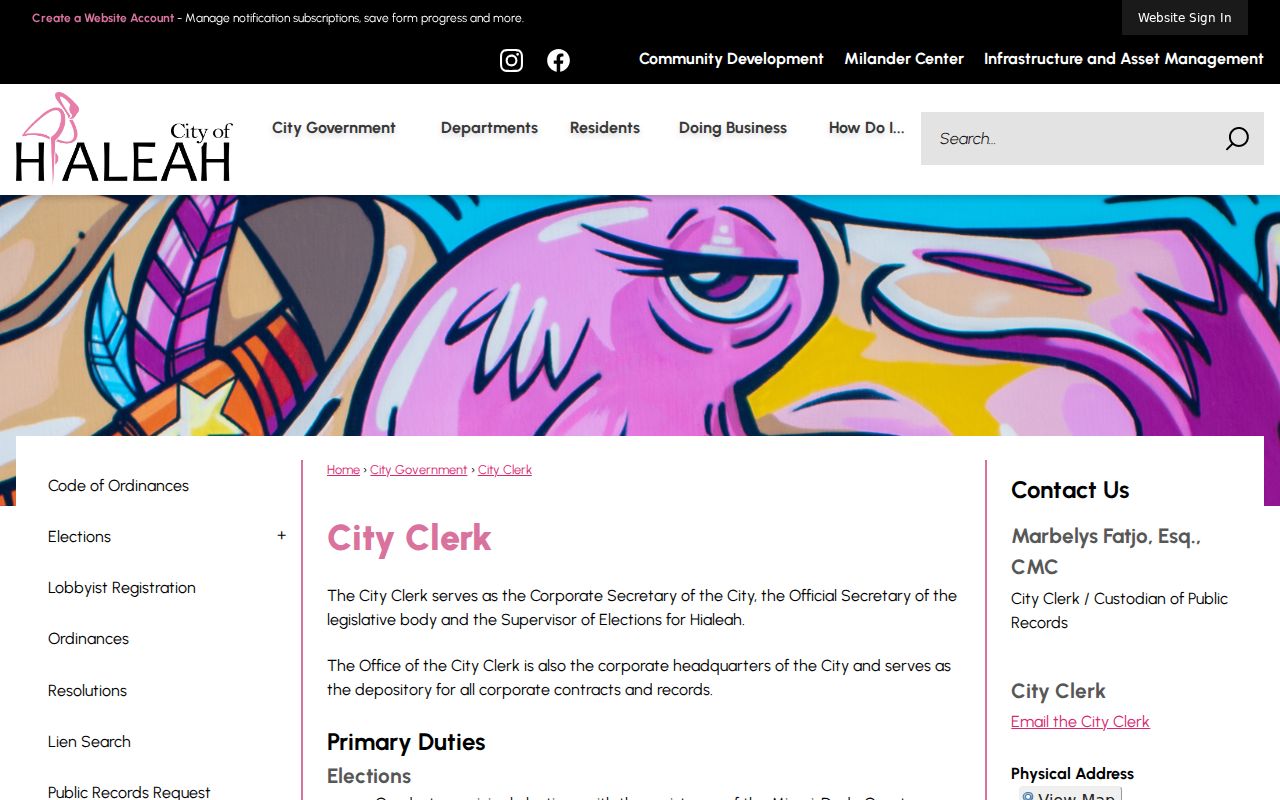
That city office is the practical route for a named permit plan, meeting record, ordinance, or local file that cannot be retrieved from a county index.
Search Hialeah Property Names
The Property Appraiser supplies the strongest public address-to-owner bridge. Its parcel card can show the owner, folio, legal description, situs address, owner mailing address, values, lot and building facts, sales, and exemptions. Situs means the physical location of the parcel. A mailing address is where the owner receives notices, so it may point somewhere else. Homestead makes owner occupancy more likely for that roll year but does not identify every person in the home.
| Search choice | What to enter | Best use |
|---|---|---|
| Address | Street number and name; suite may refine | Resolve a home to its folio |
| Owner Name | Roll owner's name | Find parcels tied to a known person |
| Subdivision Name | Recorded subdivision | Browse a development |
| Folio | 13-digit parcel identifier | Return to the exact parcel |
Roll data are continually edited. Save the roll year and verify ownership through the recorded deed when legal certainty matters. The complete address workflow belongs in the Hialeah directory by street.
Read Hialeah Deed Indexes
The Miami-Dade Clerk's Official Records index links people to land and other filed instruments. Search modes include party name, Clerk's File Number, recording book and page, legal description, date range, and document type. A grantor is the person or entity giving an interest, while a grantee receives it. The index can also surface mortgages, releases, liens, judgments, declarations of domicile, powers of attorney, plats, and notices of commencement.
Most recorded documents from 1974 forward are searchable online, but that date is a practical web cutoff, not the beginning of county land records or a promise that every image appears. Earlier work moves to the Records Library. Public computers there search party name, file number, subdivision, lot, block, plat, and book/page. Staff searching costs $2 per name per year. Copies are $1 per page plus $2 for certification, and mail requests are accepted with a full name, record type, and address or legal description.
Current Hialeah Resident Sources
A current Hialeah residents directory is a set of official sources with different scopes. Each source proves only what its keeper records. Property data show ownership, court data show participation in a case, and corporation filings show a business role. None alone proves a complete household.
| Official source | Useful resident evidence | Custodian | Access route |
|---|---|---|---|
| Parcel roll | Owner, situs, mailing address, folio | Property Appraiser | Free web search |
| Official Records | Parties to deeds, liens, and filed instruments | County Recorder | Index, library, mail |
| Court indexes | Party role, case number, docket, disposition | Miami-Dade Clerk | Online systems and counter |
| Voter information | Status, precinct, and districts for a verified voter | Florida and County Elections | Personal lookup or scoped request |
| Permits and city files | Address, folio, owner, application type | Hialeah | Permit portal or records request |
The Hialeah resident lookup explains how to compare these sources without merging people who merely share a name.
Request Hialeah City Files
Florida's Constitution and Chapter 119 open nonexempt government records for inspection and copying. A requester need not give citizenship, a reason, special wording, or identification. Hialeah accepts requests online, by email, mail, telephone, and at the City Clerk counter. Describe the record type, date range, address, permit number, incident number, or other identifier. A narrow request is easier to route and price than a demand for every item about a person.
The city's NextRequest portal logs and tracks public-record requests.
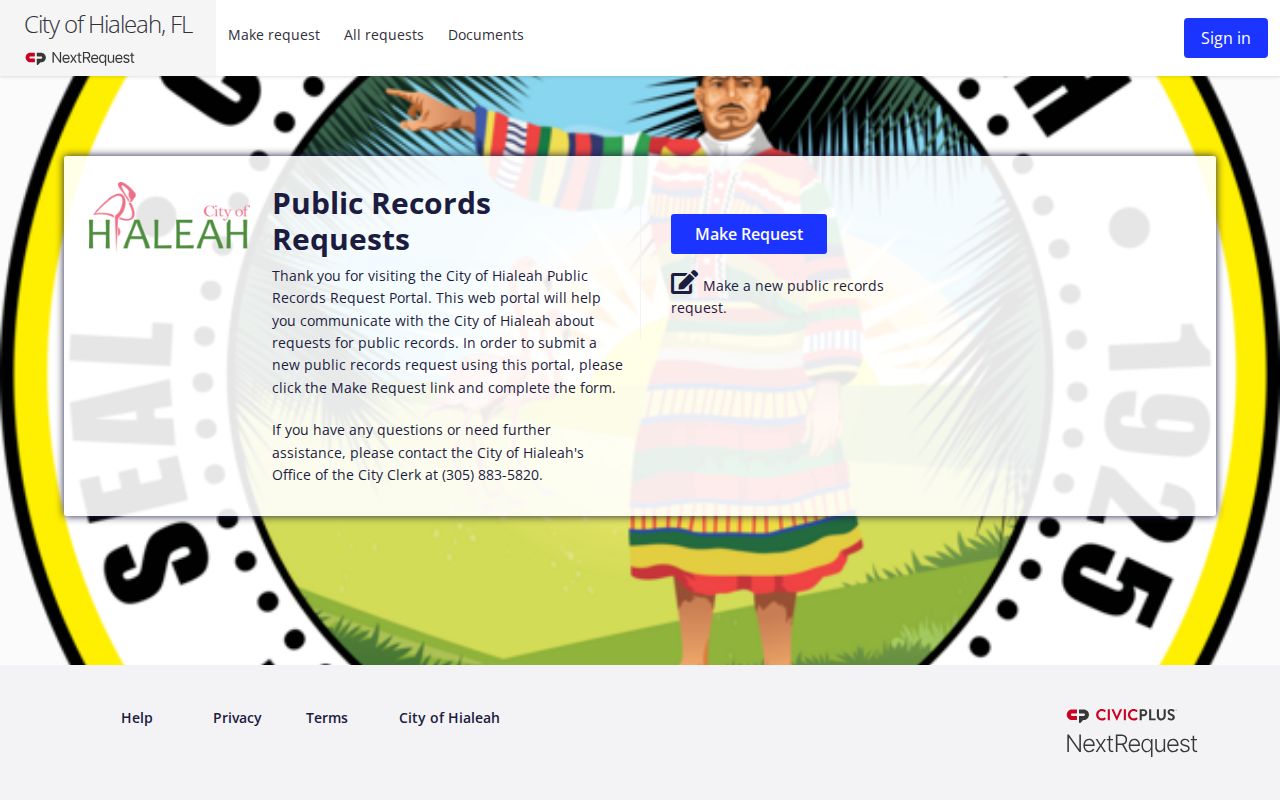
The same channels remain available when the portal is inconvenient. Ask to inspect an existing record or receive it in an existing electronic format, and request a cost estimate before work requiring extensive staff or technology time begins.
The city's public-record instructions also explain how to submit a request.
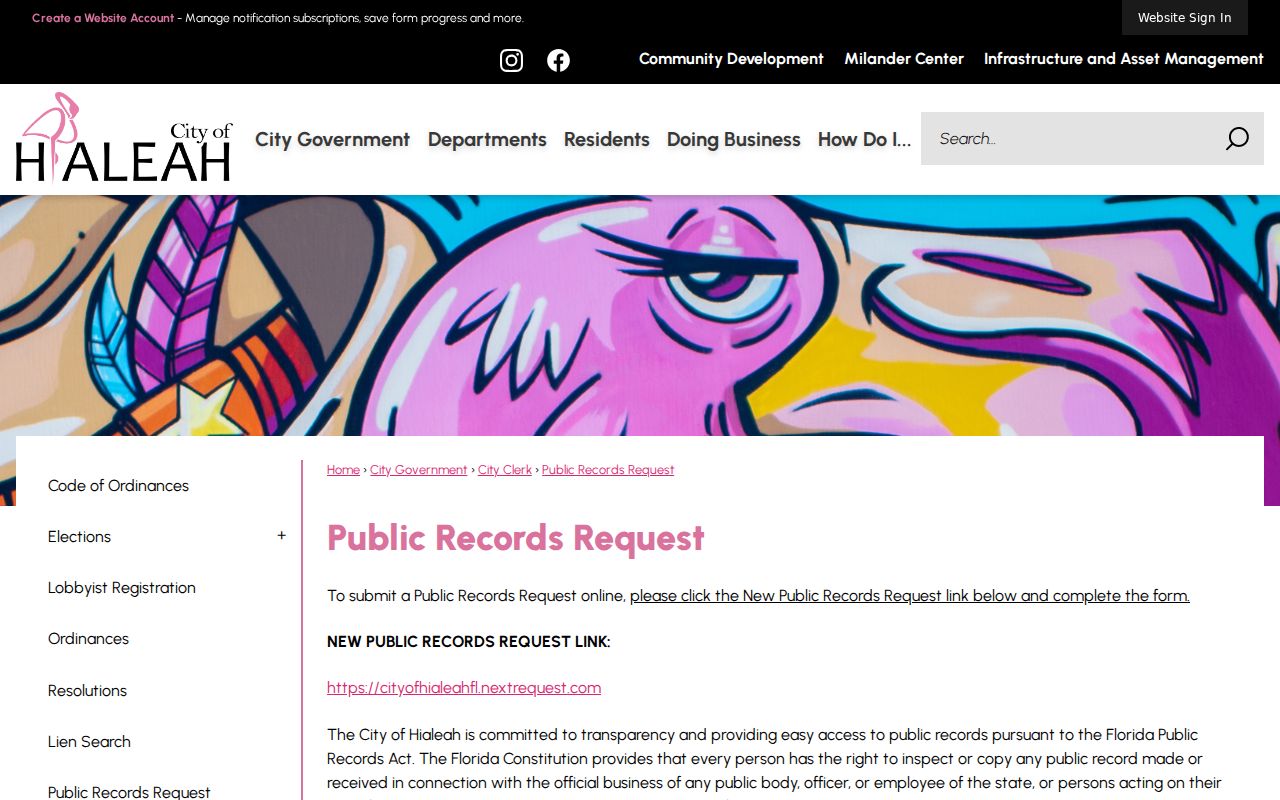
That official page confirms the clerk's contact routes and the rule that a requester does not have to explain why the record is wanted.
Permit and code files are especially useful when the name trail is weak. Hialeah's permit search accepts a process or permit number, a structured address, folio, or owner name. Results identify the project number, folio, address, owner shown for that application, application type, and a map link. Treat the owner column as evidence tied to that project date, not as a current household roll. Archived plans and file images can be requested from the clerk when the result row lacks enough detail. The city's broader violation and lien research product is different from an ordinary request for an already identified permit. In 2026 it costs $500 per folio, plus $50 for each added address on that folio, and has a stated seven-to-ten-business-day turnaround. A two-business-day expedite adds $100. Someone who needs one known permit should request that existing record first instead of automatically buying the broader search.
Check Hialeah Court Leads
The Miami-Dade Clerk maintains separate Civil, Family and Probate and Criminal Justice search systems. A result can show a party name and role, case number, case type, filing date, judge, docket entries, and a disposition when public. Read the docket or order before describing an outcome. A complaint, charge, or initial filing is not the final ruling. Sealed, confidential, juvenile, and protected family material may be absent or redacted.
The Miami-Dade Clerk gateway directs residents to the correct records division.
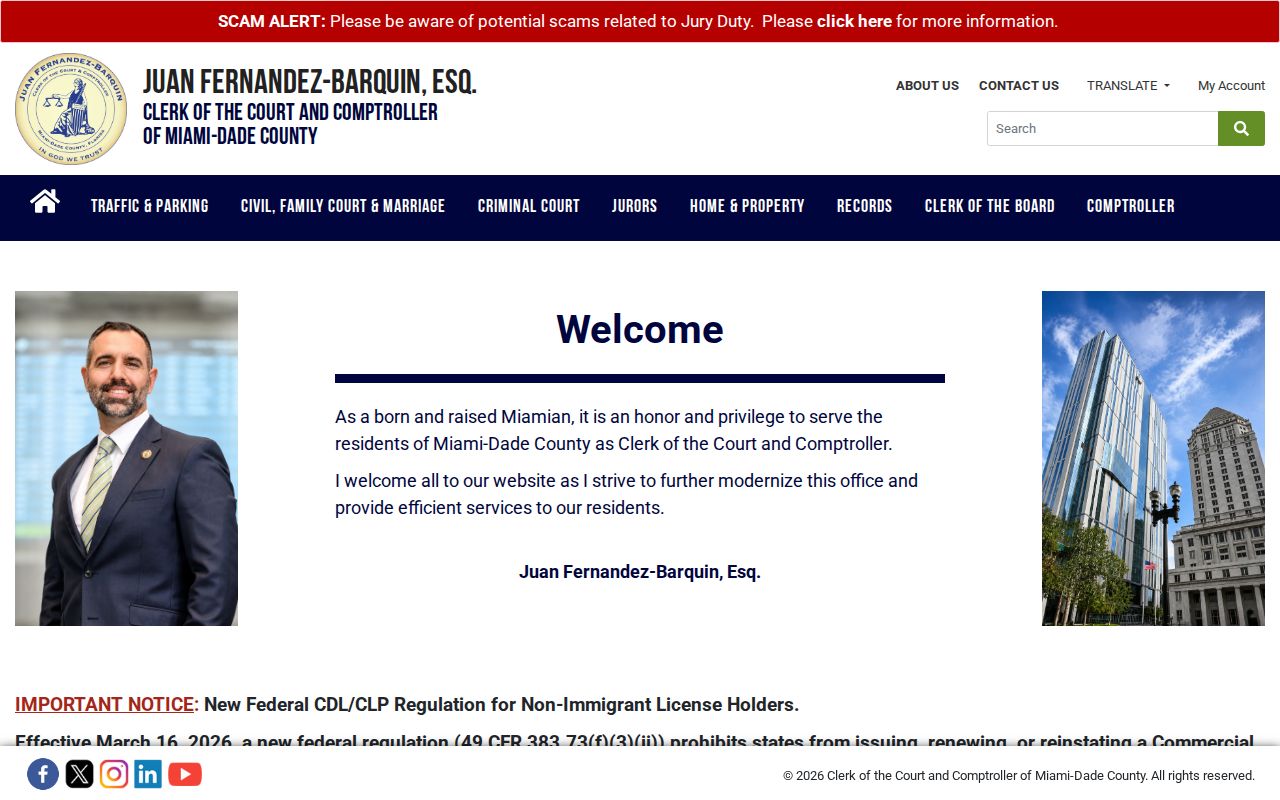
For an offline copy, use the case number at a public terminal or ask for the register of actions and named documents. Federal matters in the Southern District of Florida use PACER, which is not an expanded county search.
Understand Florida Voter Records
The state Voter Information Lookup is designed for one voter to confirm status, polling place, precinct, and districts using identifying fields. It is not a public browse-by-street directory. Miami-Dade Elections is the local custodian for public extracts and precinct statistics. A scoped Chapter 119 request should state the snapshot date, precinct, municipality or ZIP area, desired public fields, and electronic format.
Florida law protects Social Security and driver-license numbers, registration-location information, preregistrant data, and copies of signatures. Address exemptions may protect eligible people as well. Participation history shows that a voter took part in an election, never how the ballot was marked.
Explore Hialeah Historical Directories
Hialeah incorporated in 1925, while Dade County dates to 1836. People from the area before incorporation may be filed under Dade County, Miami vicinity, a subdivision, census geography, or a postal heading. The county became Miami-Dade in 1997. Those changes make catalog terms and dates as important as the resident's name.
The Miami-Dade Public Library System Main Library Genealogy Collection holds more than 27,000 books and 35,000 microforms, including city directories, telephone indexes, Florida censuses, and other family-history sources. Florida Memory offers a digitized 1889 Miami telephone directory and an 1845 Miami election return. HistoryMiami adds directories, newspapers, yearbooks, maps, photographs, family papers, and architectural holdings by appointment. Detailed collection and entry guidance is available in the Hialeah city directories collection.
- Directory
- A publisher's list of selected people, addresses, occupations, or phone subscribers.
- Criss-cross directory
- A volume arranged by street and house number rather than surname.
- Index
- A finding aid that points to a record but may not contain its full text.
- Parcel
- A mapped unit of land identified in Miami-Dade by a folio.
Follow Hialeah Obituary Clues
The MDPLS obituary index covers more than 915,000 people in Miami-Dade sources from 1896 through 2008. Search fields include first, middle, and last name plus publication start and end dates. At least a first or last name is required. Results can show the name, age, source, publication date, and birth state. An entry is only a citation. Some source notices are one sentence, and a state death certificate is a different record.
Herald material may be followed through library NewsBank access for eligible cardholders. Other named papers often require Main Library microfilm. Probate filings and obituary details can help distinguish relatives and heirs when the dates and relationships agree, but neither should be forced onto a same-name person without supporting facts.
Verify Hialeah Postal Geography
A Hialeah mailing city or ZIP code does not prove that a parcel lies within the municipal boundary. Several street-delivery ZIP codes cross city lines, and USPS geography serves mail rather than city government. Confirm the folio, situs city, and municipal boundary in county property data or Hialeah GIS before sending a request. The city GIS separates true situs city and ZIP from owner mailing fields and also marks annexation and unincorporated categories.
Use the Hialeah ZIP directory for ZIP-by-ZIP coverage and the Hialeah neighbors search for adjacent parcel work. This distinction prevents a request from going to Hialeah when Miami-Dade County or another municipality actually keeps the local file.
Compare Official Directory Sources
Official records are narrower than commercial compilations, but their keeper, date, purpose, and correction route are clear. Commercial people-finding products may combine public and purchased data, lag behind moves, or conflate two residents. They are best treated as unverified leads, never as proof.
| Choice | Strength | Main limit |
|---|---|---|
| Official roll or index | Named custodian and defined fields | Covers only the office's function |
| Certified copy | Official reproduction of a held record | Fees and eligibility may apply |
| Commercial compilation | May gather many sources quickly | Can be stale, incomplete, or merged |
Protect Hialeah Resident Privacy
Florida's public-record rule works alongside specific exemptions. Safe Address gives eligible survivors a substitute address and mail forwarding. Section 119.071 protects addresses and contact details for certain classes and circumstances. The County Recorder provides routes to redact financial identifiers and remove eligible exempt information or web images when the requester identifies the instrument and legal basis.
The Florida Digital Bill of Rights, sections 501.701 through 501.722, provides rights against covered private controllers, subject to scope and exemptions. It does not erase public records governed by access and retention law. Correct an official error with the agency that created the record, using its case, folio, filing, or document number and proof of the correction.
Use Florida Records Guidance
The Florida Department of State records guidance explains the statewide framework for asking a custodian for an existing public record.
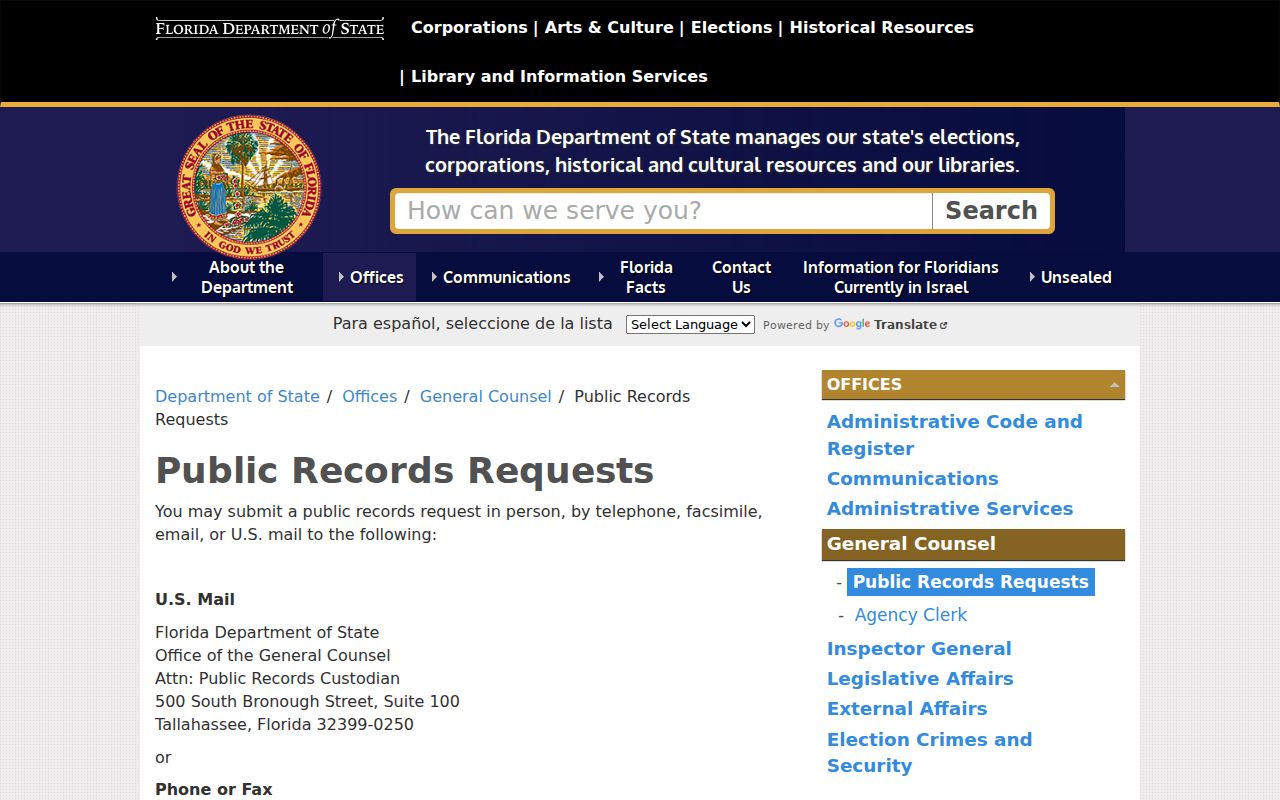
It is the useful fallback when a Hialeah resident search reaches a state-held record or when a requester needs to understand inspection, copying, exemptions, and agency routing under Chapter 119.
Know Hialeah's Local Context
Hialeah's official history places the city in northwest Miami-Dade, shaped by early development, Hialeah Park, major transport corridors, and later Cuban and Latin American migration. Those facts affect records work. Mixed industrial and residential parcels appear along key roads, while the city's language history makes two-surname and variant-name searches essential.
The official Hialeah overview supplies the municipal context.
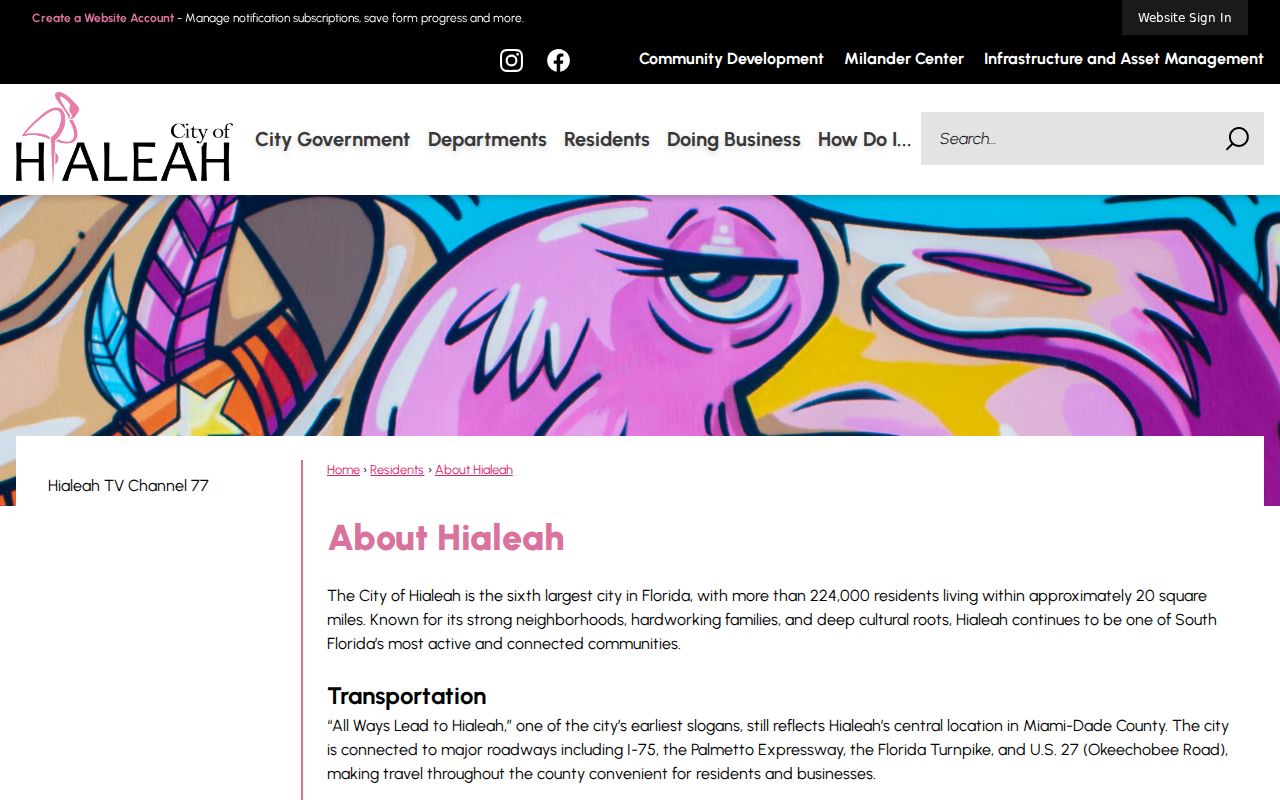
For early residents, search beyond the modern city label. For current addresses, separate municipal jurisdiction from postal naming before choosing a records office.
Route Miami-Dade Record Requests
When the county holds the needed file but its topic portal does not expose it, use the Miami-Dade public-records portal to identify the custodian.
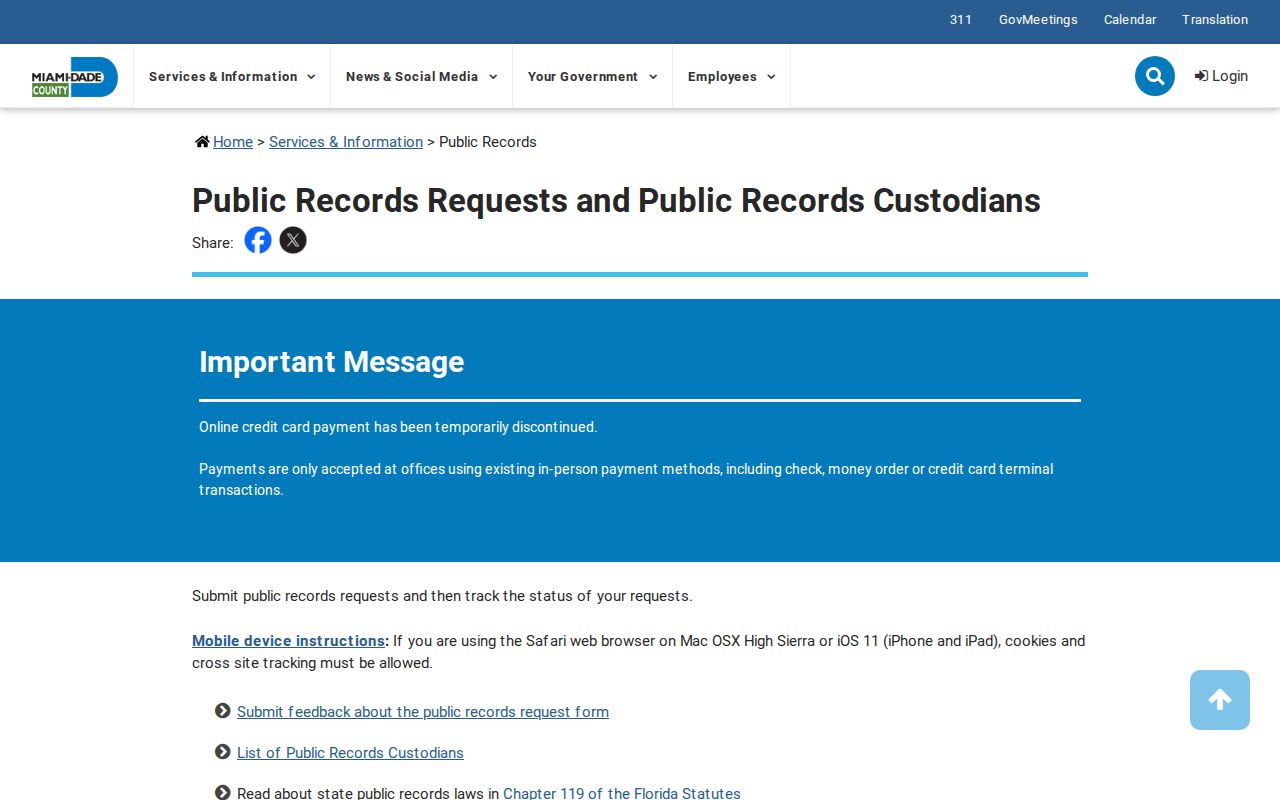
State the record, date span, names, case or folio number, and preferred existing format. County routing is especially important for property, elections, court, recorded-document, tax, and county agency records tied to Hialeah.
Note: A public index entry is a lead; verify the underlying document and its date before relying on it.